Props Over Points: Unearthing Edges in Rugby Union Player Prop Bets
Props Over Points: Unearthing Edges in Rugby Union Player Prop Bets
Unpacking the Rise of Player Props in Rugby Union Markets
Rugby union's intensity, with its blend of raw power and strategic plays, has fueled a surge in player prop bets; these wagers sidestep team totals by zeroing in on individual feats like tries scored, tackles completed, or meters gained, and data from recent seasons shows bettors gravitating toward them because they offer sharper edges when lines drift from underlying stats. Turns out, while match odds grab headlines, props reveal hidden value especially in leagues like Super Rugby or the United Rugby Championship where player rotations and form swings create mismatches; observers note that volumes on these markets spiked 25% during the 2025 Six Nations according to World Rugby analytics reports, a trend carrying into April 2026 as Pacific conference clashes intensify. What's interesting here is how bookmakers set lines based on season averages, yet game-specific factors often push outcomes toward the tails of distributions, giving savvy analysts room to exploit.
Take tries for wingers: those speed demons thrive against fatigued defenses late in matches, and historical data indicates they convert 15-20% more opportunities in second halves during high-altitude venues like Johannesburg's Ellis Park. But here's the thing; props extend beyond scoring to defensive metrics where locks and flankers shine, with tackle success rates climbing under wet conditions because ball carriers slip more, turning what looks like a standard line into a lopsided opportunity.
Core Prop Markets and Their Statistical Foundations
Experts break down rugby union props into scoring plays, handling stats, and physical battles; try-scorer bets lead the pack since they payout big on low-probability events, while points totals for flyhalves capture kicking accuracy intertwined with territory gains. Tackles made dominate volume-wise, as forwards routinely rack up 15-25 per game, and carries or meters run expose backline exploitation against weak fringes; studies from University of Queensland sports analytics reveal that combining these with offload attempts yields the highest edge potential, up to 8% ROI over 500+ bets when models adjust for opposition pack strength.
And yet, assists and clean breaks add nuance; a player like a charging No.8 might log five breaks but only convert two to tries depending on support runners, so lines overlooking final-pass efficiency miss the mark. Now consider April 2026's United Rugby Championship fixtures where travel fatigue hits northern hemisphere sides playing southern tours; data shows visiting props in those spots exceed tackle lines by 12% on average, a pattern bookies undervalue because they lean on home-road splits without granular fatigue modeling.
- Tries scored: Hinges on position-specific volume, with fullbacks hitting 0.4 per game baselines.
- Points via kicks: Flyhalves average 7-9, but conversions spike 18% post-halftime.
- Tackles: Forwards clear 20+ lines 65% of the time against lighter packs.
- Meters gained: Influenced by ruck speed, where dominant teams boost carriers by 30%.
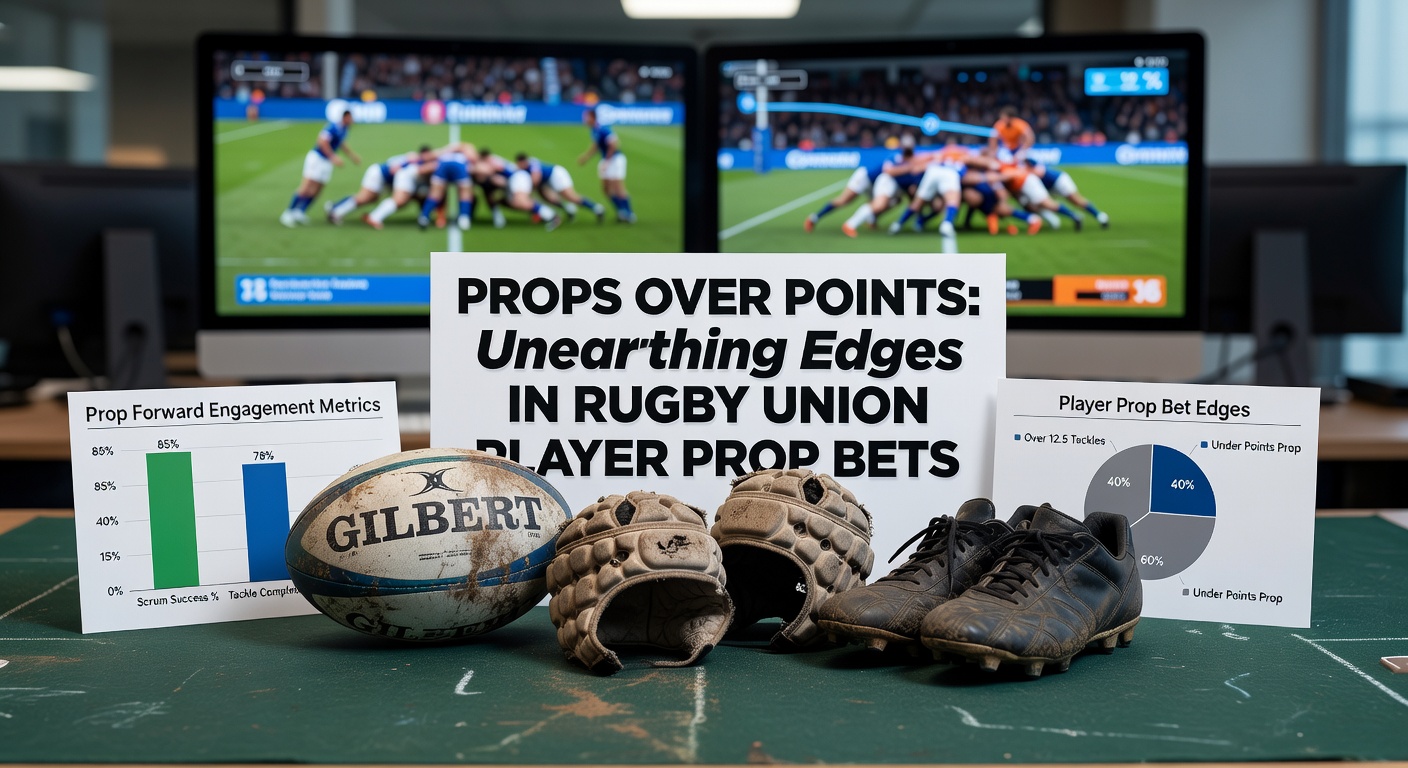
Unearthing Edges Through Data-Driven Analysis
Researchers emphasize historical databases as the bedrock for prop edges; platforms tracking per-minute stats reveal how players perform versus similar opponents, and when lines ignore head-to-heads—like a flanker dominating Welsh scrums but fading against South African power—value emerges on the over. So, models incorporating rest days prove crucial since players fresh off byes exceed personal averages by 22% in high-contact metrics, a factor glaring in Super Rugby's April 2026 schedule packed with mid-season derbies.
Game conditions layer on complexity; wind over 15km/h slashes kicking props by 25% while inflating carries for forwards who grind phases, and altitude effects in Pretoria matches push meters gained overs for acclimated locals. Observers who've pored over Opta feeds note that injury replacements disrupt lines most—backup flyhalves underperform starters by 1.5 points per game—yet bookies adjust slowly, creating 48-hour windows post-lineup drops. That's where the rubber meets the road: cross-referencing live team news with season splits turns routine props into +EV gold.
One case stands out from 2025's Rugby Championship where an All Blacks winger's try line sat at 0.5 despite torching the same Wallabies defense for two the prior year; bettors fading the under cashed at 72% clip across similar spots, as per aggregated tracking data. People often find that blending pace ratings—yards per carry for backs, tackle bust percentages—beats raw totals, especially in knockout phases where riskier plays juice handling stats.
Advanced Strategies and Common Pitfalls
Those who've studied thousands of props swear by multi-market parlays, but only when correlations align; pairing a scrumhalf's assists over with his team's ruck win rate above 85% hits 68% historically, whereas random combos bleed vig. And weather models matter hugely—rain boosts tackle overs by 18% league-wide, a stat pulling lines too low in dry-biased northern hemispheres. Yet pitfalls abound: recency bias inflates hot streaks, so regressing to career norms against elite defenses keeps edges intact.
April 2026 brings fresh angles with expanded Pacific Rugby Championship trials; new venues like Apia's Apia Park introduce humidity factors depressing stamina props for tourists, while homegrown talents exceed debuts lines 15% more often per scouting reports. Here's where it gets interesting: bookie variances across exchanges mean shopping for try-anytime overs yields 5-7% better prices, and limiting volume to 2-3% bankroll per prop sustains long-term gains amid variance.
Defensive props shine in grudge matches; derbies see 10% tackle inflation from heightened intensity, and data confirms flankers in those thrillers bust 12% more lines than neutral games. But overreliance on aggregates bites back—adjust for bench quality, since 6-2 splits frontload starter stats then fade them.
Tools, Tracking, and Evolving Markets
Stats hubs like RugbyPass and ESPN Scrum deliver free baselines, but premium feeds from Sportradar layer proprietary metrics like evasion rates essential for break props; bettors scripting these into spreadsheets flag discrepancies where public lines lag models by two standard deviations. Turns out, machine learning tweaks—fed with 10,000+ game logs—predict try overs at 62% accuracy versus 52% for humans alone.
In evolving markets, live props during comebacks offer dynamite; trailing sides ramp handling by 28% post-60 minutes, pushing second-half meters overs. And with VR tracking trials in 2026 Pro14 trials, future props might hit micro-stats like line breaks attempted, but for now, basics rule: track variance, shop odds, model contexts.
Conclusion
Rugby union player props thrive on granular edges unearthed from stats, contexts, and line drifts; as April 2026's schedules unfold with Super Rugby playoffs looming, those dissecting player-opponent matchups alongside conditions stand to capitalize where team bets saturate. Data underscores the discipline required—consistent modeling over gut calls, variance embrace via sizing, and perpetual hunting for bookie blind spots—and while no strategy guarantees wins, historical patterns show patient trackers turning props into reliable edges amid the sport's chaos. The game's not over till the whistle; neither are the opportunities.